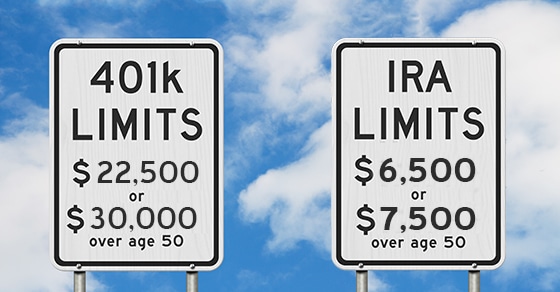

If your business doesn’t already have a retirement plan, it might be a good time to take the plunge. Current retirement plan rules allow for significant tax-deductible contributions. For example, if you’re self-employed and set up a SEP-IRA, you can contribute up to 20% of your self-employment earnings, with a maximum contribution of $69,000 for […]
If you have a tax-favored retirement account, including a traditional IRA, you’ll become exposed to the federal income tax required minimum distribution (RMD) rules after reaching a certain age. If you inherit a tax-favored retirement account, including a traditional or Roth IRA, you’ll also have to deal with these rules. Specifically, you’ll have to: 1) […]
Some people mistakenly believe that Social Security benefits are always free from federal income tax. Unfortunately, that’s often not the case. In fact, depending on how much overall income you have, up to 85% of your benefits could be hit with federal income tax. While the truth about the federal income tax bite on Social […]
Many small business owners run their companies as leanly as possible. This often means not offering what are considered standard fringe benefits for midsize or larger companies, such as a retirement plan. If this is the case for your small business, don’t give up on the idea of helping your employees save for retirement in […]
Most businesses today need to offer a solid benefits package. Failing to do so could mean falling behind in the competition to hire and retain talent in today’s tight job market. When it comes to retirement benefits, however, smaller companies may struggle with the financial and administrative burdens of sponsoring their own plans. The good news […]
If you’re age 50 or older, you can probably make extra “catch-up” contributions to your tax-favored retirement account(s). It is worth the trouble? Yes! Here are the rules of the road. The deal with IRAs Eligible taxpayers can make extra catch-up contributions of up to $1,000 annually to a traditional or Roth IRA. If you’ll […]
If you own a successful small business with no employees, you might be ready to set up a retirement plan. Now a 401(k) might seem way out of your reach — only bigger companies can manage one of those, right? Not necessarily. Two ways to contribute With a solo 401(k), the self-employed can make large […]
When one spouse in a married couple is not earning compensation, the couple may not be able to save as much as they need for a comfortable retirement. In general, an IRA contribution is allowed only if a taxpayer earns compensation. However, there’s an exception involving a “spousal” IRA. It allows contributions to be made […]
A new law was recently signed that will help Americans save more for retirement, although many of the provisions don’t kick in for a few years. The Setting Every Community Up for Retirement Enhancement 2.0 Act (SECURE 2.0) was signed into law on December 29, 2022. SECURE 2.0 is meant to build on the original […]
Many self-employed individuals are eligible to make annual contributions to Roth IRAs, despite having healthy earnings from their businesses. But some haven’t yet taken advantage of this retirement saving strategy. Making annual Roth contributions can have a big upside by allowing you to accumulate a federal-income-tax-free nest egg for retirement. Roth IRA Basics Contributions to Roth […]